
metalworkingmag.com
06
'26
Written on Modified on
CNC Grinding Machine Modernization & Precision Retrofitting
ESOMA partnered with FANUC to upgrade legacy grinding machine tools using advanced numerical control systems.
www.fanuc.eu
Application area: Machine tool modernization and precision CNC grinding
Industry sector: Industrial manufacturing and retrofitting engineering
ESOMA, an engineering specialist in machine tool retrofit services, modernizes legacy industrial equipment to extend operational lifecycles and increase manufacturing throughput. To address performance degradation and technological obsolescence in legacy grinding equipment, the company initiated a complete technical overhaul program designed to replace aging components with advanced digital motion control and customized operator interfaces.
Legacy Equipment Limitations in Precision Grinding
Aging CNC grinding systems frequently suffer from degraded mechanical tolerances, control platform obsolescence, and declining operational stability. In demanding manufacturing workflows, legacy electronic architectures fail to sustain the tight precision margins and high availability rates required for modern workloads. Furthermore, the lack of modern interfaces complicates machine setup, increases programming overhead, and elevates the risk of component failure during continuous production runs.
System Architecture Redesign and CNC Integration
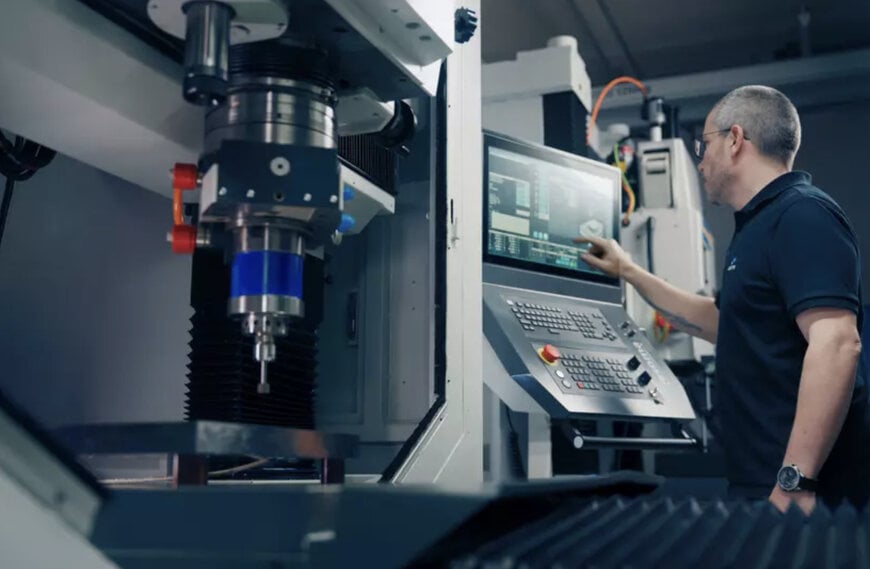
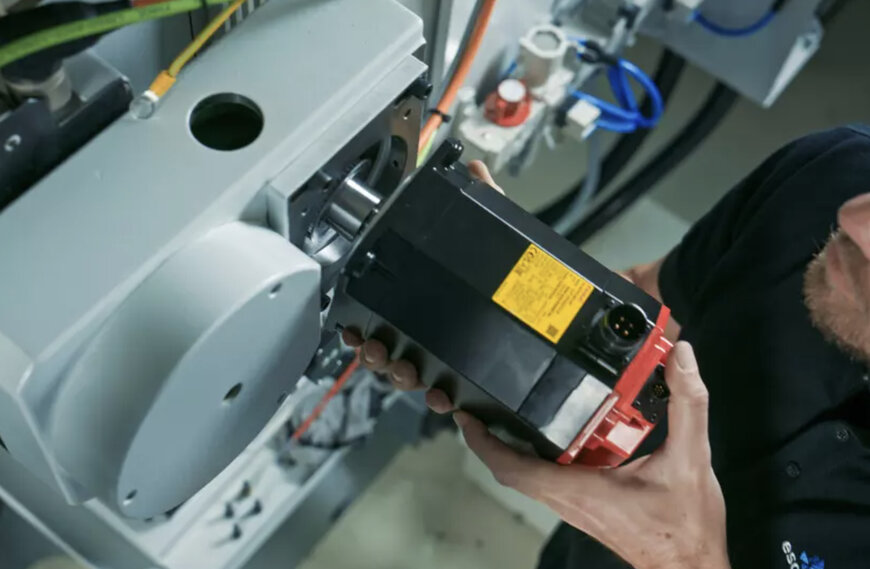
To resolve these operational constraints, engineering teams implemented an end-to-end modernization strategy combining mechanical rebuilding with high-reliability automation. The mechanical assemblies were overhauled to restore baseline geometrical tolerances, while the entire electrical infrastructure was redesigned around a new industrial electronics cabinet. At the center of the control platform, ESOMA integrated a FANUC numerical control architecture combined with a customized human-machine interface structured specifically for grinding parameters.
Operational Optimization and Technical Outcomes
The integrated control environment harmonizes mechanical motion with real-time digital feedback, eliminating control lag and improving interpolation accuracy during complex grinding cycles. The customized interface reduces configuration errors and shortens setup changeovers for machine operators. By combining mechanical restoration with the new control infrastructure, the overhauled grinding machines achieved operational stability, precision, and continuous-duty reliability comparable to newly manufactured production units.
Edited by Natania Lyngdoh, Induportals editor, with AI assistance.
www.fanuc.com
Industry sector: Industrial manufacturing and retrofitting engineering
ESOMA, an engineering specialist in machine tool retrofit services, modernizes legacy industrial equipment to extend operational lifecycles and increase manufacturing throughput. To address performance degradation and technological obsolescence in legacy grinding equipment, the company initiated a complete technical overhaul program designed to replace aging components with advanced digital motion control and customized operator interfaces.
Legacy Equipment Limitations in Precision Grinding
Aging CNC grinding systems frequently suffer from degraded mechanical tolerances, control platform obsolescence, and declining operational stability. In demanding manufacturing workflows, legacy electronic architectures fail to sustain the tight precision margins and high availability rates required for modern workloads. Furthermore, the lack of modern interfaces complicates machine setup, increases programming overhead, and elevates the risk of component failure during continuous production runs.
System Architecture Redesign and CNC Integration
To resolve these operational constraints, engineering teams implemented an end-to-end modernization strategy combining mechanical rebuilding with high-reliability automation. The mechanical assemblies were overhauled to restore baseline geometrical tolerances, while the entire electrical infrastructure was redesigned around a new industrial electronics cabinet. At the center of the control platform, ESOMA integrated a FANUC numerical control architecture combined with a customized human-machine interface structured specifically for grinding parameters.
Operational Optimization and Technical Outcomes
The integrated control environment harmonizes mechanical motion with real-time digital feedback, eliminating control lag and improving interpolation accuracy during complex grinding cycles. The customized interface reduces configuration errors and shortens setup changeovers for machine operators. By combining mechanical restoration with the new control infrastructure, the overhauled grinding machines achieved operational stability, precision, and continuous-duty reliability comparable to newly manufactured production units.
Edited by Natania Lyngdoh, Induportals editor, with AI assistance.
www.fanuc.com
