
metalworkingmag.com
08
'26
Written on Modified on
High-Productivity Reaming for Large Bores
Expanded MAPAL HPR400 System Enhances Fine Machining for Industrial Bore Production.
mapal.com
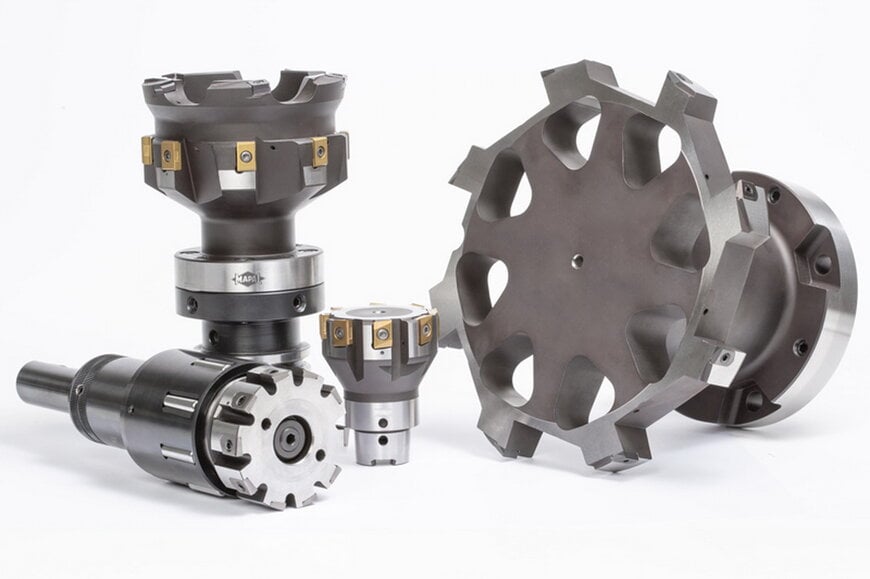
MAPAL introduces enhancements to the HPR400 and HPR400 plus reaming systems, expanding capabilities for large-diameter bore machining in automotive, fluid power and electrified mobility components with a focus on productivity, versatility and process reliability.
MAPAL’s HPR400 system comprises multi-bladed reamers designed for fine machining of large diameter bores where tolerance, surface quality and cycle time are critical. The recent updates to the system deliver new configurations and tooling solutions that target reduced non-productive time and higher throughput in series manufacturing environments such as engine housings, steering knuckles and stator bores for electric motors.
System Design and Operational Context
Reaming is a finishing operation that enlarges and refines holes to precise diameters and surface finishes; it is integral to the digital supply chain for precision machining in sectors including automotive and hydraulics. The HPR400 system utilizes indexable inserts mounted in high-precision seats on the tool body, allowing users to change cutting edges on site without external reconditioning. This plug-and-play approach reduces machine downtime and logistical overhead compared with traditional brazed tools that require workshop resetting.
The standard HPR400 configuration uses inserts with one cutting edge per insert, optimized for precision and consistent bore quality. The HPR400 plus variant increases cutting edge count to four per insert, substantially improving material utilization and lowering cost per part through prolonged insert life and simplified inventory. Tools are offered in diameter ranges suitable for large bores and can be equipped with carbide, cermet, PCD or PcBN inserts depending on workpiece material.
New Practical Solutions and Use Cases
Recent enhancements introduce three application-focused solutions within the HPR400 family. The one-shot configuration combines an ISO pre-machining stage with HPR400 finishing, enabling bores with up to 6 mm of stock allowance to be machined in a single operation. This reduces cycle time and eliminates the need for intermediate tool changes.
A customized HPR400 plus design addresses face groove machining, where bores with base contours must maintain precise clearances. The two usable cutting edges on this variant provide stability and cost-effective cutting in complex profiles typically found in steering components and bearing seats.
An HPR400 solution using PCD inserts specifically targets stator housing bores in electric motors. The increased number of cutting edges and the absence of setting requirements support higher machining speeds and output, addressing the productivity demands of e-mobility component production.
Technical and Process Implications
The HPR400 system’s design emphasizes reduced non-productive time through onsite insert changes without resetting, supported by high-accuracy insert seats that ensure repeatability. Multi-blade configurations enable higher cutting speeds and feeds than single-blade reamers, contributing to shorter cycle times while meeting fine machining tolerances. The adaptability of the system to various materials and cutting geometries makes it relevant across multiple industries where fine bore quality is essential.
Compared with conventional reamers that rely on periodic reconditioning and external setting, the HPR400 approach reduces tool stock requirements and logistical costs, key metrics in evaluating machining productivity and total cost of ownership.
Application Domains and Benefits
Typical application areas include automotive assemblies such as brake callipers, driveline housings, hydraulic components and electric motor stators. In these domains, the balance of precision, speed and operational simplicity directly impacts manufacturing throughput and quality. The enhanced HPR400 system addresses these needs by integrating flexible tool configurations, reduced setup complexity and robust cutting performance, supporting industrial fine machining objectives in competitive production environments.
www.mapal.com
