
metalworkingmag.com
16
'26
Written on Modified on
MAPAL introduces second-generation MEGA-Deep-Drill-Alu for aluminium machining
The new tool features enlarged cooling channels and achieves drilling depths of up to 40xD.
mapal.com
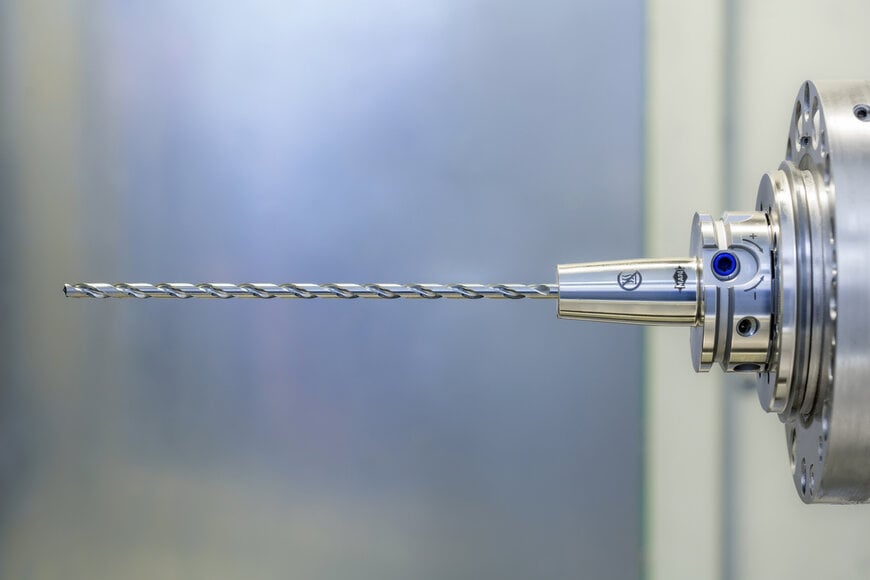
MAPAL has launched the second generation of its MEGA-Deep-Drill-Alu, a tool engineered to master the challenges of deep hole drilling in aluminium. Developed primarily for the automotive industry and general machining sectors, the new drill supports high feed rates and reliable chip evacuation across a broad spectrum of materials, ranging from wrought alloys to high-silicon cast aluminium. Available in diameters from 3 mm to 16 mm, the tool supports extreme drilling lengths ranging from 15xD up to 40xD.
Enhanced geometry for cross bores and angled exits
To maintain process stability at extreme drilling depths, the MEGA-Deep-Drill-Alu incorporates an adapted core diameter profile alongside four guide margins. This design ensures precise tool guidance over the entire bore depth, mitigating vibrations even when navigating complex internal part geometries such as cross bores or angled exits. The tool features a straight main cutting edge that reduces macroscopic flaws and burr formation, while double point thinning and ultra-finely ground chip flutes accelerate the continuous removal of aluminium chips. During field trials, the drill achieved feed rates of up to 0.4 millimeters per revolution and demonstrated tool lives extending up to 3.2 kilometers of drilled material.
High-volume cooling and configurable coatings
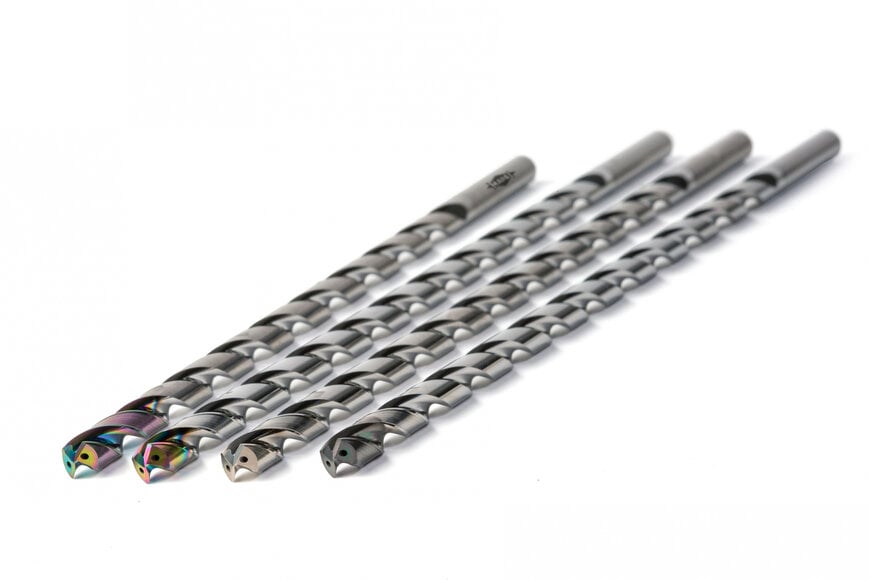
A critical differentiator of the second-generation design is its internal cooling architecture. MAPAL has enlarged the cooling channels by 20 percent, directing a significantly higher volume of coolant directly to the main cutting edge and corners. This advanced thermal management minimizes wear and maintains fracture strength, which is particularly beneficial when utilizing Minimum Quantity Lubrication (MQL) systems. To accommodate varying abrasive properties, the base uncoated tool can be tailored with two configurable head coatings. This flexibility allows manufacturers to precisely adapt the drill's wear resistance based on the specific silicon content of the target aluminium alloy and the facility's specific coolant strategy.
Additional Context: Managing built-up edge in deep aluminium drilling
This section details technical specifications and competitive benchmarking not included in the original product announcement.
Deep hole drilling in aluminium (typically defined as depth-to-diameter ratios exceeding 10xD) presents unique tribological challenges compared to machining steel. Aluminium's high ductility and low melting point make it highly prone to adhesion, leading to a "built-up edge" (BUE) where the softened material micro-welds directly to the carbide cutting tool. If chips are not rapidly evacuated, they pack inside the flutes, causing catastrophic tool breakage deep inside the bore. Furthermore, cast aluminium alloys used in automotive engine blocks contain high levels of silicon to improve casting fluidity. These silicon precipitates act like highly abrasive microscopic sand within the metal matrix, rapidly wearing down standard cutting edges. The combination of ultra-polished flutes (to reduce friction and prevent BUE), specialized hard coatings (to resist silicon abrasion), and oversized coolant channels (to forcefully flush chips out using high-pressure fluid or MQL aerosols) is essential for maintaining deterministic, continuous manufacturing processes in high-volume automotive production lines.
Edited by an industrial journalist, Lekshman Ramdas, with AI assistance.
www.mapal.com
