
metalworkingmag.com
29
'26
Written on Modified on
Styler's Intelligent Welding Adapts to Battery Material Variations
Styler's adaptive spot welding technology automatically compensates for material inconsistencies, ensuring reliable lithium-ion battery pack quality and production efficiency.
www.stylerwelding.com
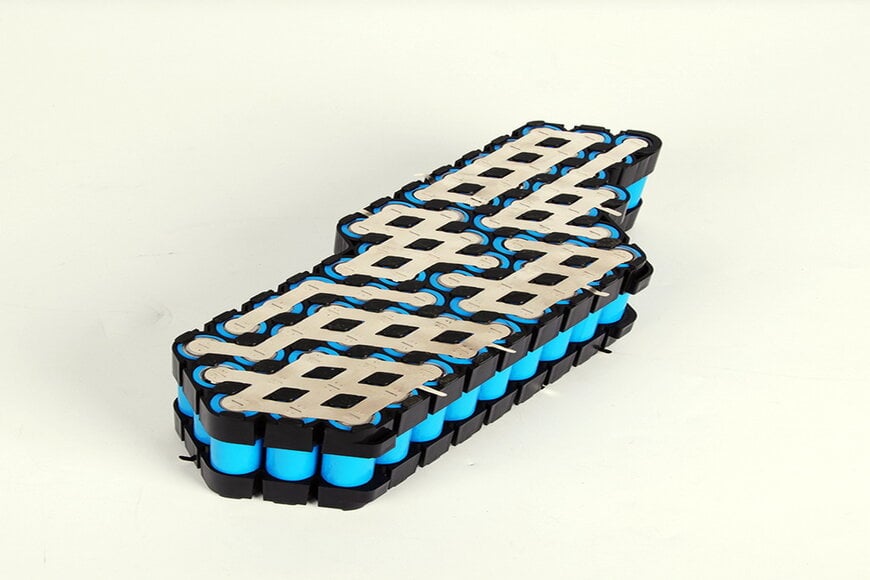
In modern lithium-ion battery production, welding is a critical process that directly affects electrical performance, mechanical integrity, and overall safety of the final battery pack. Variations in battery materials — whether in thickness, conductivity, or surface condition — pose a significant challenge for conventional welding methods, which rely on static parameters and are unable to adjust to changing conditions in real time. This article explains how intelligent adaptive welding systems address these challenges, the key components of such systems, and why they represent a technical advantage over traditional welding approaches.
The Problem of Material Inconsistency in Battery Welding
Battery packs consist of many interconnected cells and components that must be joined with high electrical and mechanical reliability. Minor differences in material geometry or surface conditions can lead to defects such as poor fusion, high resistance joints, or localized overheating. In battery manufacturing, inconsistencies in material thickness or conductivity translate directly into variation in weld quality and may compromise performance or safety. Traditional welding systems, which operate on fixed parameters without real-time adjustment, struggle to maintain consistent results across such variability.
What Makes a Welding System “Adaptive”?
Adaptive welding systems integrate real-time sensing, control algorithms, and dynamic feedback loops that automatically modify welding parameters in response to actual material conditions during each weld cycle. These systems overcome the limitations of static control by continuously measuring variables — such as joint geometry and electrical characteristics — and adjusting energy input, electrode force, or travel speed to maintain consistent joint formation.
At the core of adaptive welding technology are sensors (e.g., vision systems, laser profilers, force/torque sensors) that capture relevant process data. These inputs are processed by embedded controllers or machine learning models that determine the optimal welding parameters for the specific conditions detected, such as variation in thickness or inconsistency in conductivity. The system then applies adjustments in real time, ensuring the weld stays within predefined quality criteria.
Automatic Electrode Compensation
Adaptive systems can detect changes in material thickness or conductivity and adjust electrode positioning or welding energy accordingly. This automatic electrode compensation ensures that each weld delivers the appropriate heat and pressure, mitigating defects caused by slight deviations inherent to cell components or busbar materials. This capability is especially important for lithium-ion cells where even small deviations can significantly affect electrical performance.
Real-Time Data Acquisition and Process Control
Modern adaptive welding systems embed data acquisition tools that continuously monitor welding parameters such as current, voltage, and positional feedback. Through real-time analysis, these systems maintain consistent process conditions and enable immediate corrective action if deviations occur. This reduces variability, enhances repeatability, and supports process traceability — a requirement in high-volume battery production environments.
Integration with Process Monitoring and Quality Analytics
Beyond in-process adjustments, intelligent welding systems can feed data into manufacturing execution systems or quality analytics platforms, enabling engineers to identify trends, refine process recipes, and reduce material waste. This connectivity supports higher overall equipment effectiveness (OEE) and can contribute to lower operating costs by minimizing rework.
Technical Differentiation Compared to Traditional Welding Systems
The principal differentiation of intelligent adaptive welding systems lies in responsive control rather than predetermined settings. Conventional systems apply fixed parameter sets based on assumed ideal conditions; they do not sense or react to deviations in material properties. Adaptive solutions, by contrast, sense conditions on a weld-by-weld basis and adjust control variables automatically, reducing defects that originate from part variability. This dynamic adjustment capability is particularly valuable in battery manufacturing, where material heterogeneity and tight tolerances are common.
Moreover, adaptive systems often incorporate advanced algorithms — including machine learning models — that can improve performance over time by recognizing patterns in process data and refining control strategies. This contrasts with conventional closed-loop controllers that simply react to single variables without learning or pattern recognition.
Implications for Battery Manufacturing Quality and Efficiency
By compensating for material inconsistencies and adjusting parameters in real time, adaptive welding systems improve both process consistency and end-product reliability. This results in fewer defects, lower scrap rates, and better electrical connections within battery packs. The enhanced control also supports higher throughput and more stable high-volume production — critical factors as demand for EV and energy storage batteries continues to grow.
www.stylerwelding.com
