
metalworkingmag.com
18
'26
Written on Modified on
Turnkey Machining from Simulation to Production
MAPAL combines engineering, tooling, and process validation to accelerate ramp-up and support stable manufacturing operations.
mapal.com
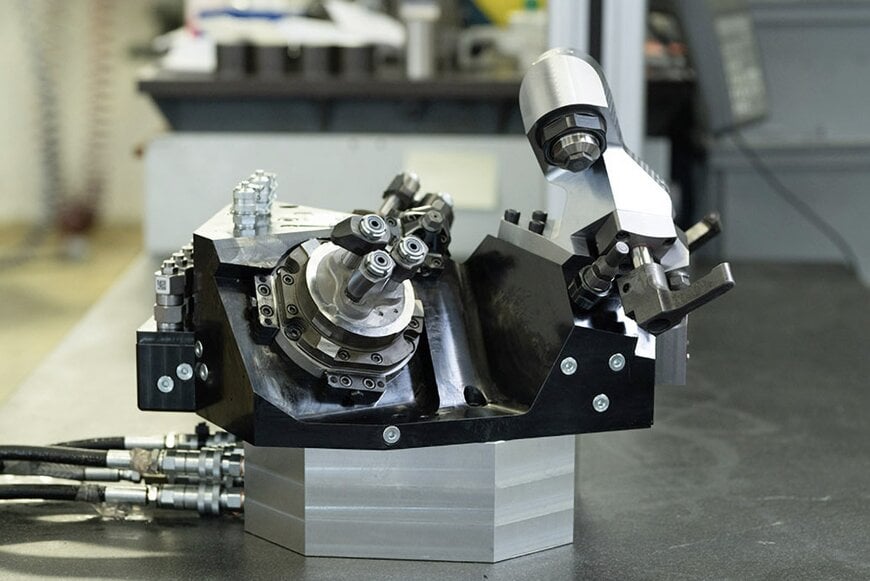
MAPAL is expanding its turnkey engineering services to provide comprehensive manufacturing solutions that integrate process analysis, tool design, and production support. This centralized methodology addresses the rigorous quality and tolerance requirements of the automotive, e-mobility, aerospace, and fluid power industries by establishing stable machining operations from initial deployment.
Centralized Engineering Within the Digital Supply Chain
Industrial manufacturing environments frequently require a reduction in administrative interfaces and organizational complexity to accelerate new product launches. To achieve this, the turnkey framework transitions the provider's role from a supplier of discrete cutting components to an architect of the entire machining process. This encompasses the precise specification of machine tools, cutting implements, custom clamping fixtures, and supporting digital services. According to Stephan Köstler, Senior Director Product & Service Management at MAPAL, this structural integration ensures that the provider assumes responsibility for the entire operational workflow, stating that the organization delivers functional production systems rather than isolated components. This methodology provides production facilities with substantiated financial planning metrics, including precise return-on-investment calculations derived from optimized cutting data and controlled process costs.
Digital Simulation and Process Capability Validation
The technical mechanism driving this holistic approach is the utilization of a complete three-dimensional simulation chain executed prior to physical deployment. Engineers digitally embed custom clamping fixtures into the exact virtual machine environment, allowing for comprehensive collision analysis and numerical control program verification. By executing these structural and kinematic checks virtually, manufacturers eliminate geometric interferences and programming anomalies before actual physical machining begins.
Consequently, production lines are engineered to achieve stable Process Capability Index (CpK) values immediately upon production launch. The turnkey package delivers the pre-engineered process alongside ready-to-use tooling, functional testing documentation, and established cutting parameters, thereby significantly compressing the standard production ramp-up timeline.
Data Integration and Manufacturing Ecosystems
To systematically advance these turnkey deployments, continuous process optimization is being embedded into a broader manufacturing data ecosystem. Through formal research initiatives such as PRODaaS and the subsequent PRODaaS@SCALE project, engineering teams are developing standardized mechanisms to feed real-time operational data back into the initial planning phases. This continuous data feedback loop establishes an adaptive production framework where physical machining metrics continuously refine the underlying digital models, resulting in highly transparent and efficient lifecycle management for complex machined components.
Additional Context
This section details technical specifications and competitive benchmarking not included in the original news release.
The industrial market for turnkey machining and process engineering is populated by major tooling manufacturers that offer comprehensive production optimization, including Sandvik Coromant through its digital machining engineering services and Seco Tools via its manufacturing consultancy division. While traditional tooling supply focuses strictly on the metallurgical and geometric performance of the cutting insert, turnkey engineering providers differentiate themselves by supplying custom workholding fixtures, complete numerical control programming, and pre-deployment kinematic simulations. The primary industrial benchmark for these comprehensive services is the ability to guarantee specific CpK values and cycle times prior to physical machine integration. Competitors utilize comparable digital twin strategies to map the machine envelope; however, differentiation occurs through the proprietary integration of tool telemetry and the internal capacity to design, manufacture, and test specialized clamping fixtures without relying on third-party engineering firms.
Edited by Aishwarya Mambet, Induportals Editor, with AI assistance.
www.mapal.com
