
metalworkingmag.com
21
'26
Written on Modified on
Cylindrical Laser Processing Platforms for Medical Devices
Aerotech develops a high-speed, integrated positioning architecture to improve throughput and precision in the automated manufacturing of tubular medical implants.
www.aerotech.com
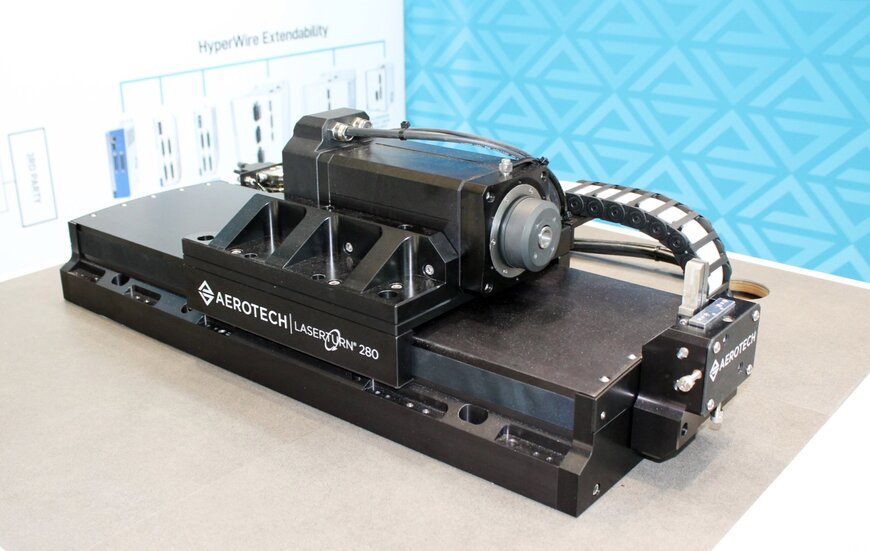
Aerotech is releasing the LaserTurn280 motion platform, a system engineered to optimize the laser machining of cylindrical components for medical device manufacturing. This release targets the high-volume production of cardiovascular stents, hypotubes, and minimally invasive surgical instruments by integrating linear and rotary positioning mechanisms.
Addressing Demands for Automated Tube Processing
Medical device manufacturing requires precise laser cutting of tubular structures ranging from coronary and neurovascular stents to peripheral vascular implants. Components often vary in length from a few millimeters to over a meter, demanding motion systems that can handle strict geometric tolerances without sacrificing cycle times. Developed from the existing PRO280LM linear stage architecture, the platform allows machine builders to transition into series production by combining high rigidity with contamination protection. Initial prototypes were demonstrated at medical technology trade fairs prior to the scheduled market availability in the second half of 2026.
Kinematic Performance and Clamping Mechanisms
The system supports tube diameters spanning 0.3 to 30 millimeters and features a linear travel capacity of 300 millimeters with maximum speeds reaching 1,000 millimeters per second. Positional accuracy is governed by ironless linear motors and non-contact optical encoders, achieving a calibrated linear accuracy of ±1 µm and rotary accuracy of ±30 µrad. The corresponding bidirectional repeatability is ±0.4 µm linearly and ±15 µrad rotationally.
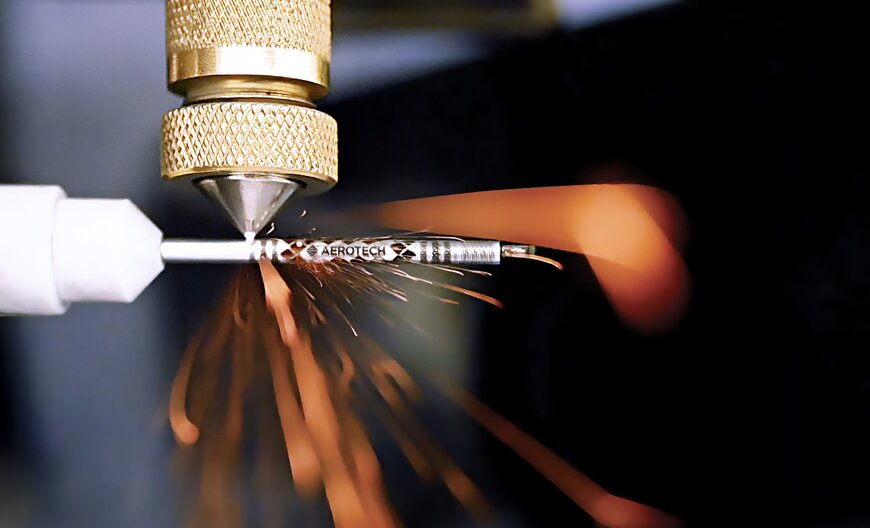
To secure components during high-speed operation, the hardware utilizes pneumatically actuated clamping mechanisms operating on dry, oil-free nitrogen or compressed air. Engineers can specify TF20 or W12 collet chucks utilizing a dead-length design, which specifically minimizes axial movement during feeding to prevent stitching errors when processing extended workpieces. Standard ER precision collets, including ER16, ER25, and ER40 formats, are also available depending on the application requirements.
Integration into the Digital Supply Chain
Integrating automated hardware into a broader digital supply chain requires streamlined controls and material handling capabilities. The platform utilizes the Automation1 motion controller, which includes Position Synchronized Output capabilities to align laser pulses precisely with axis movements. Additionally, Enhanced Tracking Control algorithms reduce path errors when machining complex, high-speed contours.
To facilitate hardware integration, the system includes internal cable management, a clear aperture for tube passage, and optional pneumatic grippers at both the front and rear for automated workpiece handling. Configurations are available for both dry and wet cutting environments, with wet configurations incorporating internal fluid management systems. Product Manager Brian Fink noted that the architecture is designed to integrate into existing production lines, ensuring reproducible part quality while reducing material scrap during continuous operation.
Additional Context
This section details technical specifications and competitive benchmarking not included in the original news release.
Motion platforms specifically engineered for cylindrical laser cutting in the medical sector represent a specialized segment, with alternative systems provided by manufacturers such as Physik Instrumente (PI) and MKS Instruments. Benchmark criteria for this equipment typically focus on bidirectional repeatability, linear tracking speed, and the integration of fluid management for wet cutting. While competing high-precision tube cutting stages often rely on air-bearing technology to achieve sub-micron repeatability, the LaserTurn280 utilizes mechanical bearings driven by ironless linear motors to achieve ±0.4 µm repeatability at speeds of 1,000 millimeters per second. Furthermore, the native integration of dead-length collet mechanisms provides a measurable advantage in reducing axial deviation during the indexing of long hypotubes, a metric where traditional ER collet systems often introduce micro-stitching errors along the cut path.
Edited by Aishwarya Mambet, Induportals Editor, with AI assistance.
www.aerotech.com
