
metalworkingmag.com
28
'26
Written on Modified on
Face Milling Heads Expand Non-Ferrous Machining Capabilities
Tungaloy has expanded its TungMeister face milling head range with new cutting geometries for non-ferrous metal machining, improving surface finish, productivity and tool versatility.
tungaloy.com
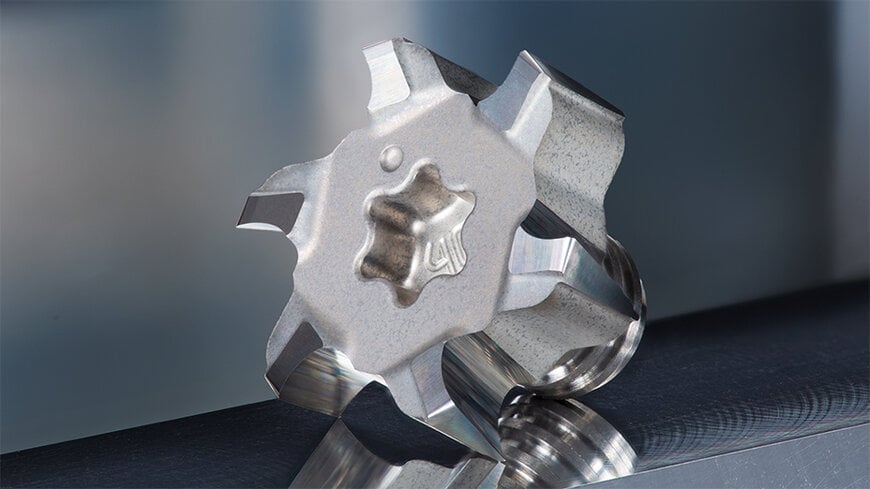
Tungaloy has expanded its TungMeister interchangeable-head milling system with a new face milling head geometry developed specifically for machining non-ferrous metals. The new addition is designed to improve surface finish, increase machining efficiency and reduce tool changes in applications such as automotive components, motor housings, precision engineering parts and Swiss-type automatic lathe production.
The latest milling heads address common challenges associated with machining aluminum and other non-ferrous materials, where conventional solid end mills often struggle to produce high-quality flat surfaces while maintaining productivity.
Addressing Surface Finish and Productivity Challenges
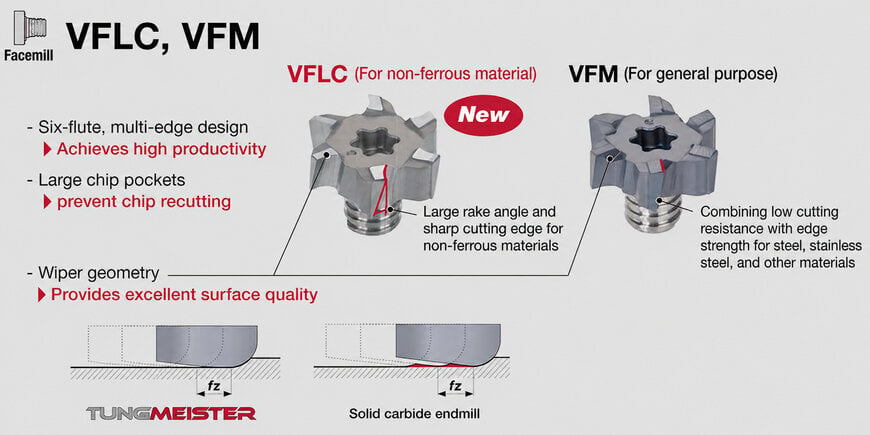
Flat surface machining of non-ferrous components is commonly performed using the end cutting edges of general-purpose solid end mills. Because these cutting edges incorporate dish angles, achieving a high-quality surface finish can be difficult, particularly on precision components.
Small-diameter cutting tools also present productivity limitations because they typically have fewer cutting edges. In high-volume production environments—including D-cut and H-cut machining on Swiss-type automatic lathes—manufacturers require machining solutions capable of delivering both improved surface quality and higher material removal rates.
Another manufacturing challenge involves machining motor housings and similar components, where separate tools are often required for frame milling and internal seat-face machining. Multiple tool changes increase machining cycle time and reduce production efficiency.
TungMeister Head-Changeable Milling System
TungMeister is Tungaloy's modular head-changeable end mill system designed for precision milling applications. The platform includes more than 45 interchangeable head geometries combined with a broad range of shank materials.
The system supports tool diameters from 5 mm to 32 mm and offers more than 25,000 possible head and shank combinations. Its interchangeable design enables rapid head replacement while maintaining repeatability and minimizing machine setup time.
Previously, TungMeister face milling heads were primarily intended for steel and stainless steel machining. The latest expansion extends the range to include dedicated geometries optimized for non-ferrous materials.
Optimized Geometry Improves Surface Quality
The new face milling heads incorporate cutting-edge geometries developed specifically for non-ferrous machining applications.
A dedicated face milling edge combined with an integrated wiper edge helps produce smoother machined surfaces. Large positive rake angles and sharp cutting edges reduce cutting forces while supporting stable machining of aluminum alloys and other non-ferrous materials.
Large chip pockets improve chip evacuation, reducing the risk of chip recutting and contributing to better surface integrity.
Small-Diameter Multi-Edge Design Increases Productivity
The general TungMeister face milling lineup begins at 10 mm diameter, while the new non-ferrous series is available from 12 mm.
Despite their compact size, the cutters feature six cutting edges, enabling higher feed rates than conventional four-flute solid end mills. This configuration is intended for high-volume production of small precision components, including D-cut and H-cut machining on Swiss-type automatic lathes.
Higher feed capability combined with stable cutting performance supports improved machining efficiency in mass-production environments.
Single Tool Supports Multiple Machining Operations
The compact cutter geometry allows the same tool to perform frame milling of mating surfaces and seat machining inside motor housings and similar components.
Its smaller diameter enables access to confined machining areas that are difficult to reach using conventional large-diameter face milling cutters. By consolidating multiple machining operations into a single tool, manufacturers can reduce tool changes, shorten setup times and improve overall production efficiency.
Demonstrated Cutting Performance
Tungaloy evaluated the new VFLC face milling head using an A5052 aluminum workpiece on a BT50 vertical machining center.
The test employed a cutting speed of 500 m/min, feed per tooth of 0.05 mm/tooth and a feed speed of 2,390 mm/min—approximately double the 1,195 mm/min reported for the comparison tool. The setup also used a shorter tool overhang of 25 mm versus 60 mm for the competing cutter, supporting greater machining stability.
Productivity Improvement in Production Testing
According to Tungaloy, production testing on ISO-A7075 aluminum machine parts demonstrated significant productivity improvements.
The VFLC face milling head, featuring sharp cutting edges and an integrated wiper edge, achieved up to 2.7 times higher productivity while maintaining excellent surface finish during face milling operations.
Additional Context:
This section details technical specifications and competitive benchmarking not included in the original product announcement
Interchangeable-head milling systems have become increasingly popular in high-volume manufacturing because they reduce tooling costs and machine downtime. Instead of replacing an entire solid carbide cutter after wear, operators only replace the cutting head while retaining the shank, improving cost efficiency and shortening setup time.
Major cutting tool manufacturers including Sandvik Coromant, Kennametal, Seco Tools, ISCAR, and Mitsubishi Materials also offer modular milling systems designed for high productivity. Tungaloy differentiates the expanded TungMeister range by combining small-diameter six-edge face milling cutters with dedicated geometries for non-ferrous materials, enabling both high-quality surface finishing and multiple machining operations using a single compact tool. This approach is particularly suited to electric motor housings, lightweight aluminum structural components and precision parts produced on Swiss-type automatic lathes, where reducing cycle time and minimizing tool changes are critical manufacturing objectives.
Edited by Sucithra Mani, Induportals editor – adapted by AI.
www.tungaloy.com
