
metalworkingmag.com
21
'26
Written on Modified on
Beckhoff at AMB 2026
From September 15 to 19, in Stuttgart, Beckhoff provides modular software and control architecture to machine builders to streamline complex metalworking, additive manufacturing, and process simulation.
www.beckhoff.com
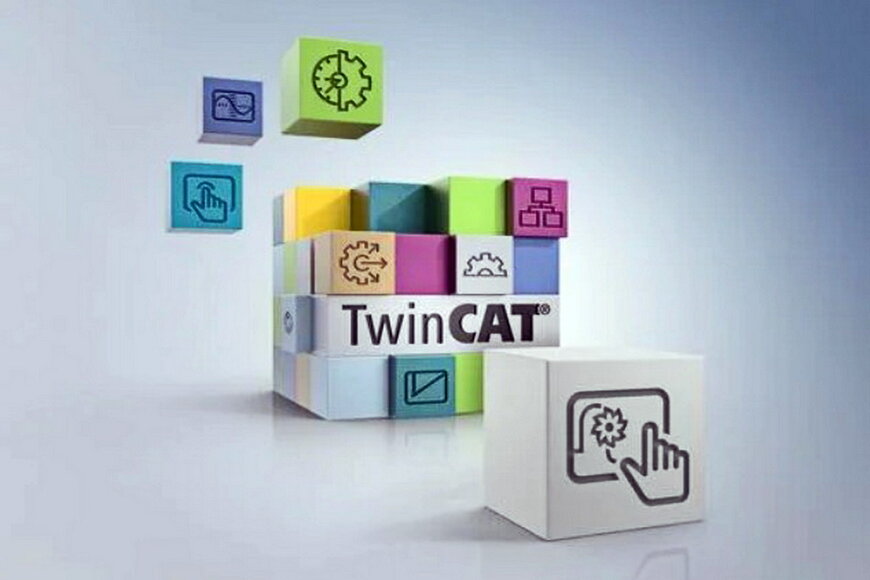
Beckhoff presents an integrated industrial automation approach for machine tool builders at AMB in Stuttgart from September 15 to 19, 2026. The technical architecture consolidates programmable logic controllers (PLC), computer numerical control (CNC), human-machine interface (HMI), and motion control into a unified software environment.
System Architecture and Integration
Modern machining processes require high synchronization between structural motion, tooling adjustments, and user interaction. To replace disparate control units, the system relies on a common software kernel. Machine builders implement standard control functions while tailoring execution profiles through pre-configured cycle libraries.
The human-machine interface links real-time CNC data and PLC registers via a unified data model. This data aggregation layer updates axis displays, overrides, jog parameters, and offset tables without separate middleware. For operational verification, an integrated simulation server executes 3D toolpath verification either synchronously with physical machining or accelerated in fast-forward mode, referencing blank parameters and active tool definitions directly from the NC program.
Specialized Kinematics and Modular Packages
To support advanced machining methods, specialized control packages address specific manufacturing requirements:
- Dual-Path Machining: Independent programming and interpolation of two toolpaths occur within a single CNC channel, complete with dedicated tool radius compensation.
- Runtime Path Modification: Online adaptation modules adjust feed rates, tool compensation, and active interpolation paths during execution via integrated software components.
- Additive Manufacturing: The system looks ahead to incoming contour geometries, synchronizing motion feeds with external process parameters including laser power and powder deposition rates.
- Electrical Discharge Machining: Dedicated interfaces manage specific erosion parameters and discharge gap controls.
Virtualization and Modular Deployment
The control environment supports execution within containerized software instances running on real-time Linux operating systems. This allows original equipment manufacturers to separate hardware layers from control logic, running scalable virtualized controls across varied computing platforms. Physical machine footprints are further reduced through the deployment of decentralized, cabinet-free I/O modules and planar motor systems for contact-free multi-directional transport.
The deployment of a unified PC-based software stack eliminates interface latency between separate hardware controllers, standardizes engineering across diverse metalworking applications, and provides deterministic execution for both conventional subtractive and additive industrial processes.
Edited by Evgeny Churilov, Induportals Media - Adapted by AI.
www.beckhoff.com
The control environment supports execution within containerized software instances running on real-time Linux operating systems. This allows original equipment manufacturers to separate hardware layers from control logic, running scalable virtualized controls across varied computing platforms. Physical machine footprints are further reduced through the deployment of decentralized, cabinet-free I/O modules and planar motor systems for contact-free multi-directional transport.
The deployment of a unified PC-based software stack eliminates interface latency between separate hardware controllers, standardizes engineering across diverse metalworking applications, and provides deterministic execution for both conventional subtractive and additive industrial processes.
Edited by Evgeny Churilov, Induportals Media - Adapted by AI.
www.beckhoff.com
