
metalworkingmag.com
18
'26
Written on Modified on
Process Optimization in Metal Fabrication Abrasives Engineering
Klingspor outlines standardized abrasive sequencing and performance benchmarking methodologies to modernize industrial grinding and surface finishing workflows.
www.klingspor.com
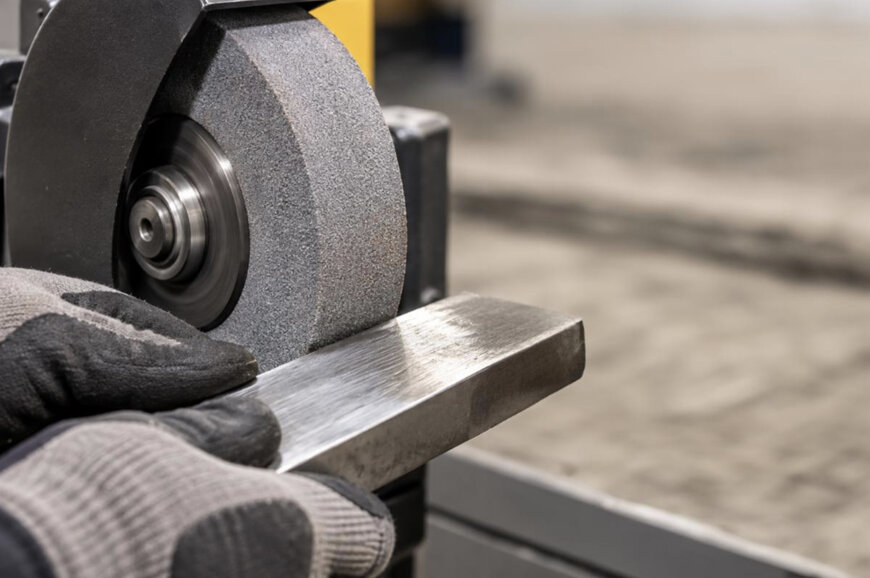
Klingspor provides engineered abrasive process planning to align material removal techniques with final surface roughness requirements across structural metalworking, architectural fabrication, and commercial equipment manufacturing. This methodology replaces variable manual techniques with repeatable, parameter-driven stages designed to reduce cycle times and material rework.
Industrial Transition Toward Standardized Metal Finishing
Industrial metal fabrication facilities face an increasing shortage of experienced manual operators alongside expanding integration of robotic cells, fiber laser cutters, and automated welding systems. Inconsistent finishing practices create sub-surface defects such as localized gouging, excessive heat tinting on austenitic stainless steels, and deep directional scratches that only become visible post-coating. Establishing deliberate surface engineering sequences addresses these challenges by making material removal measurable and repeatable across production batches.
Workpiece Geometry and Substrate Interaction
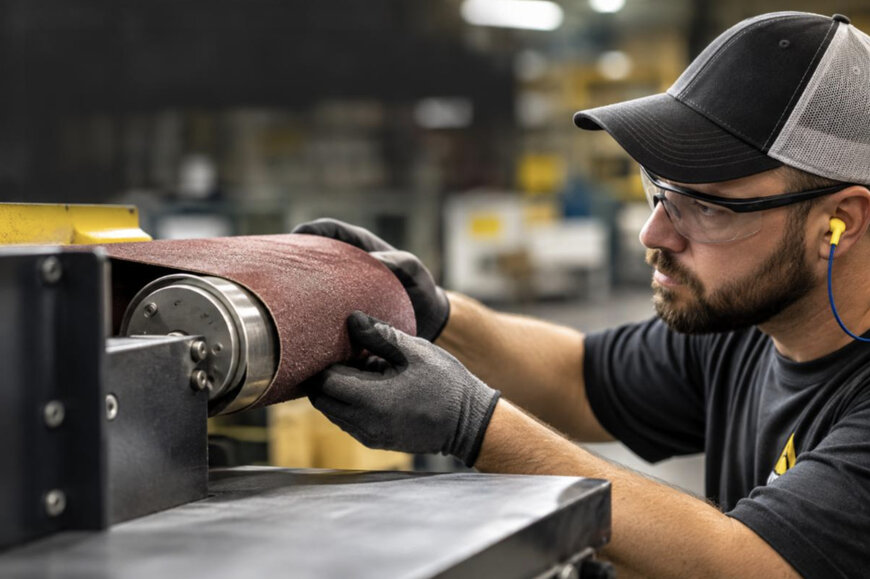
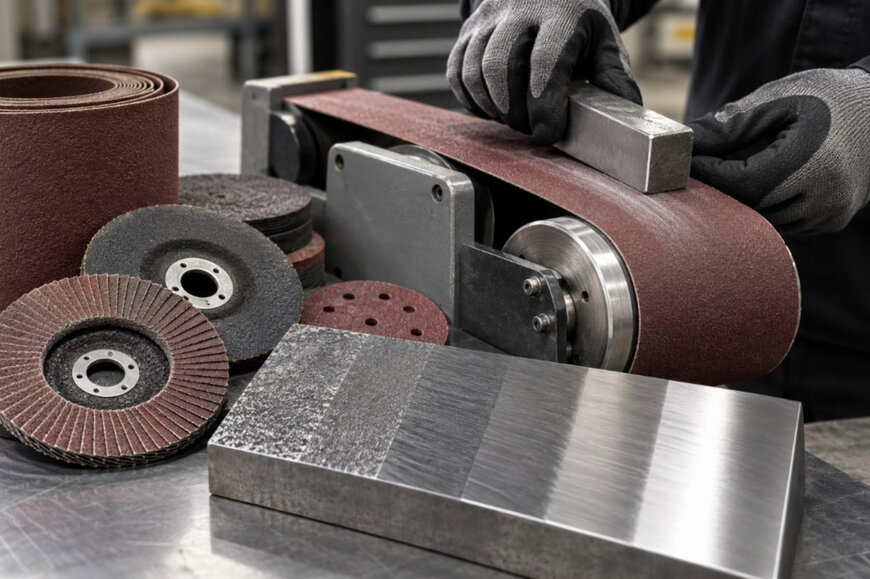
Process design begins with the final surface requirement, such as defined Ra values, directional graining, or prep surfaces for industrial powder coating. Coarse initial abrasives clear primary weld mass, while subsequent intermediate grits systematically eliminate previous scratch depths. Alternating stroke directions between grit transitions allows operators to verify the complete removal of prior scratch troughs before stepping down in roughness.
Tool conformity must also align with component profile:
- Rigid bonded grinding wheels maximize stock removal rates on non-critical carbon steel weldments but lack compliance on non-planar surfaces.
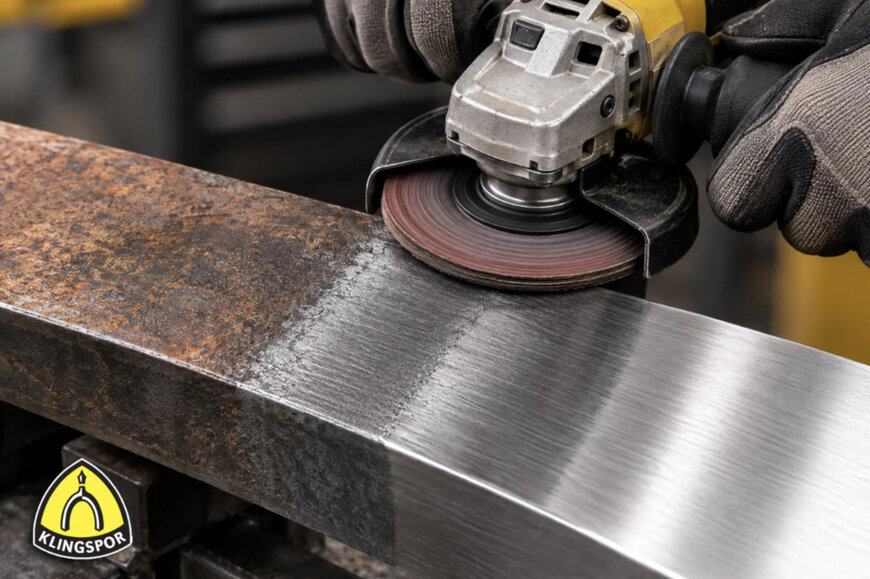
- Vulcanized fiber discs deliver high contact surface area on planar geometries with lower risk of deep gouging relative to rigid wheels.
- Coated abrasive flap discs yield compliant mechanical blending over radius transitions and sheet profiles, moderating stock removal while refining intermediate textures.
- Film and cloth backings provide targeted tensile strength and flexibility for specialized contouring and automotive fine finishing.
Quantitative Testing and Consumption Economics
Evaluating abrasive efficiency requires quantifying total processing expenditure rather than single-unit purchase price. In premature tool disposal patterns, operators often discard partially worn tools due to changes in tactile feedback or initial swarf loading.
To convert abrasive wear into standardized metrics, systematic benchmarking protocols weigh cutoff wheels before and after fixed operational intervals while recording total linear material cleaved. For superabrasives such as diamond blades, testing measures operational service life via cumulative cutting distance and slot depth prior to core degradation. These empirical metrics establish baseline consumption figures, operational cost-per-part models, and parameters for automated end-of-arm tooling on robotic workcells.
Grain Microstructures and Future Automation Integration
Fabrication shops encounter specialized corrosion-resistant and high-strength alloys that require thermal management during grinding to prevent microstructural phase changes and surface passivation failure. Modern abrasive developments leverage precision-shaped ceramic grains that fracture micro-crystallinely under load, maintaining sharp cutting facets and reducing thermal accumulation compared to conventional fused aluminum oxide or silicon carbide grains. As automated welding yields more consistent joint profiles, operations can reduce stock removal margins and bypass aggressive preliminary grinding stages, initiating surface preparation closer to the final dimensional tolerance.
Additional Context:
This section details technical specifications and competitive benchmarking not included in the original product announcement
Industrial grinding and finishing standards rely on the Federation of European Producers of Abrasives (FEPA) grit designations (P-grades) and standardized surface profile roughness metrics (Ra, Rz). In heavy weld leveling and precision finishing, competitive alternatives to conventional bonded wheels and flap discs include engineered precision-shaped ceramic grain abrasives (such as 3M Cubitron II/III platforms and Norton Quantum lines) and structured non-woven surface conditioning materials.
- Material Removal Rates and Thermal Control: Micro-replicated and precision-shaped ceramic grains demonstrate higher G-ratios (volume of metal removed divided by volume of abrasive worn) relative to conventional crushed ceramic or standard aluminum oxide. The self-sharpening fracture mechanism lowers operational grinding temperatures by reducing surface friction, mitigating heat discoloration on grade 304 and 316 stainless steels without requiring supplemental anti-loading chemical aids.
- Backing Compliance and Dynamic Balancing: Vulcanized fiber backings (typically 0.8 mm to 1.2 mm nominal thickness) offer an intermediate elastic modulus suited for planar weld dress operations, whereas Type 27 and Type 29 flap disc designs distribute unit cutting force over overlapping coated cloth leaves to reduce peak contact pressure. For automated robotic cells, dynamic balancing tolerances conforming to ISO 1940-1 reduce spindle vibration, yielding predictable robotic arm current draw and uniform material removal depth.
