
metalworkingmag.com
12
'26
Written on Modified on
PolyJet ToughONE Reinvents Packaging Development
Stratasys' PolyJet ToughONE transformed how J.L. Clark designs, tests, and validates packaging concepts before manufacturing.
www.stratasys.com
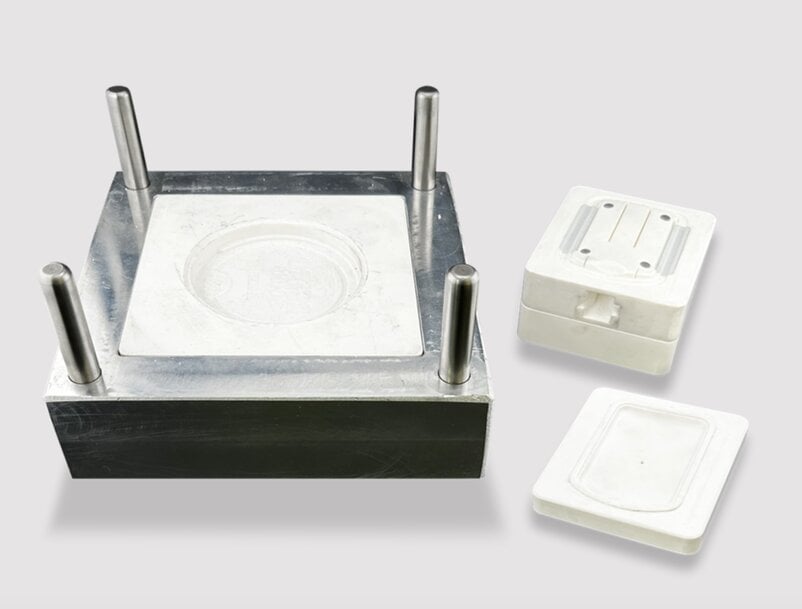
Application Areas: Rapid Prototyping, Packaging Design Validation, Reverse Engineering, Production Tooling Maintenance
Industry Sectors: Consumer Packaged Goods (CPG), Decorated Metal and Plastic Packaging Manufacturing, Additive Manufacturing
J.L. Clark manufactures decorated metal and plastic packaging for consumer packaged goods brands across the confectionery, personal care, food, and beverage sectors. A central responsibility of the company packaging engineering department involves designing, prototyping, and validating container architectures prior to high-volume manufacturing. For consumer packaged goods clients, rapid physical validation is essential to verify ergonomics, closure mechanics, and shelf appeal before committing capital to production tooling.
Overcoming Injection Molding Constraints in Prototyping
Producing test units previously required machining dedicated prototype injection molds. This tooling route introduced extensive lead times and high capital expenses, while any subsequent design alteration required costly mold modifications. The engineering team faced additional mechanical constraints because many commercial containers rely on injection-molded polypropylene. Replicating the behavior of polypropylene—specifically thin walls, snap-fit joints, and functional living hinges—proved difficult with conventional prototyping materials, which lacked the necessary ductility and fatigue resistance.
Functional Material Performance and Visual Prototyping
To resolve these prototyping bottlenecks, J.L. Clark integrated additive manufacturing technology utilizing PolyJet ToughONE material. The photopolymer formulation yields mechanical properties that closely simulate molded polypropylene, delivering the elongation and structural integrity required to operate living hinges repeatedly without failure. The system also prints high-resolution multi-color graphics directly onto the component surface, allowing brand artwork to be evaluated alongside physical features.
The packaging engineering team noted that producing accurate components with living hinges in a material that matched polypropylene performance was critical, alongside applying customer branding directly onto printed samples.
Operational Benefits Across Product Development and Maintenance
Deploying this photopolymer additive system eliminated the reliance on prototype tooling, accelerating design iteration cycles and lowering financial risk ahead of final steel mold fabrication. Physical models featuring operational snap fits and thin-wall geometry now provide customers with functional, visually accurate representations during early validation phases.
Beyond packaging development, J.L. Clark utilizes the additive system to support plant operations. Engineers reverse engineer legacy machine components and fabricate on-demand replacement parts in-house, minimizing production line downtime caused by supply-chain lead times.
Read the full case study here.
Edited by Romila DSilva, Induportals Editor, with AI assistance.
www.stratasys.com
