
metalworkingmag.com
11
'26
Written on Modified on
Vacuum Laser Welding For Heavy Machinery Steel Components
TRUMPF and RWTH Aachen optimise vacuum laser welding to reduce welding layers in industrial steel structures across heavy machinery manufacturing operations globally today.
www.trumpf.com
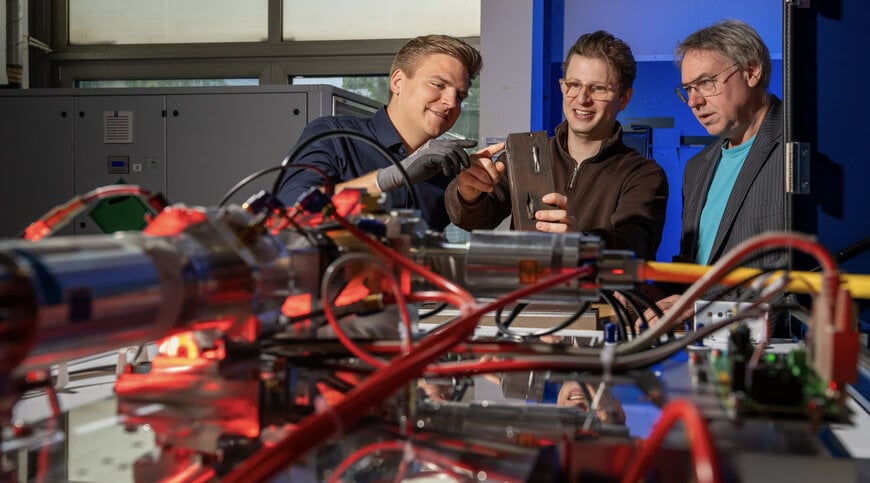
The high-technology company TRUMPF and research partners at RWTH Aachen are cooperating in the development of laser-based deep penetration welding. This new process aims to significantly accelerate the manufacturing of massive steel and aluminium structures in shipbuilding, offshore wind power, and plant engineering.
Industrial Challenge And Operational Context
The production of thick-walled steel components for monopiles, pipelines, and heavy machinery traditionally requires the step-by-step build-up of weld seams in numerous individual layers. These conventional methods are time-consuming, tie up considerable energy resources, and limit the cycle times of the entire production chain. Previous standard laser-based processes achieved welding depths of a maximum of six centimetres, which restricts the economical joining of massive metallic structures and limits productivity in heavy-duty industrial applications.
Technical Solution And Responsibilities
To overcome these infrastructural limitations, TRUMPF and RWTH Aachen have further developed the process for laser welding in a vacuum. TRUMPF provides a 50-kilowatt high-power laser for this purpose, which is equipped with the BrightLine Weld beam shaping technology. This optical system architecture enables a targeted energy distribution within the laser beam to ensure the stability and precision of the welding process. RWTH Aachen conducts the associated deep penetration welding tests and validates the physical parameters of the system for industrial deployment.
Deployment And Implementation
The welding process is carried out under a reduced ambient pressure of 50 millibars. This physical adjustment allows the laser beam to penetrate significantly deeper into the material than under normal atmospheric pressure. In contrast to electron beam welding, this approach does not require a technically complex high vacuum, which significantly facilitates machine integration into existing manufacturing halls and production lines.
Results And Expected Impacts
By deploying the system, steel structures can be joined to a depth of up to 14 centimetres in a single welding process. The reduction in the required welding layers lowers energy consumption, shortens production cycles, and measurably increases plant productivity. Simon Olschok, responsible for the tests at RWTH Aachen, explains the mechanical advancement: 'What today still requires many individual welding layers could be achieved in significantly fewer work steps in the future.' This technological foundation establishes a scalable process for the economical processing of extremely thick materials in a single operation.
Edited by Maria Brueva, Induportals editor - adapted by AI.
www.trumpf.com
