
metalworkingmag.com
18
'26
Written on Modified on
DMG MORI Expands Scalable Manufacturing Portfolio with BX and MX Solutions
Best Fit Machines offer cost-effective entry points, while MX solutions enable stepwise automation, digitalization and autonomous production as manufacturing requirements evolve.
en.dmgmori.com
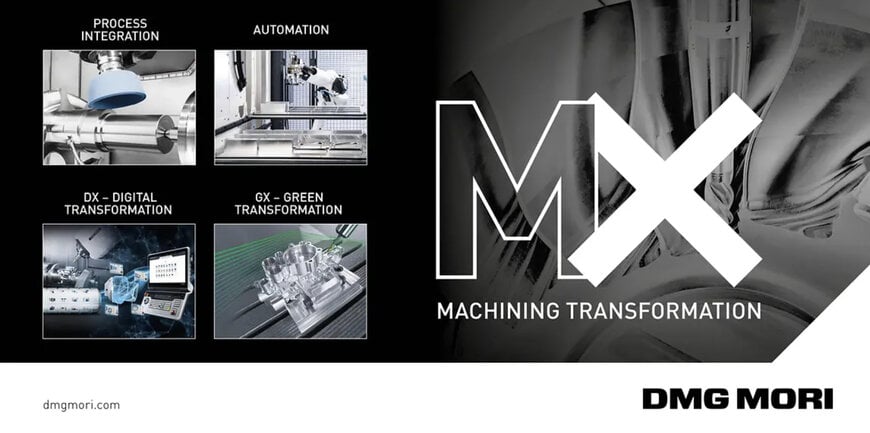
DMG MORI's Machining Transformation (MX) combines state-of-the-art machine technology with end-to-end automation and digitization to achieve maximum efficiency.
Machine tool builder DMG MORI presented its Best Fit Portfolio alongside established Machining Transformation systems at the AMB trade exhibition in Stuttgart, Germany. The strategy introduces standardized machining platforms and phased automation retrofits tailored for small and medium-sized enterprises and contract manufacturing facilities across automotive, aerospace, and tool and mold making sectors.
Standardized Machining Platforms for Cost-Optimized Output
Manufacturing facilities face compound operating constraints, including rising input expenditures, compressed batch volumes, and skilled labor shortages. In response, equipment utilization models are migrating away from monolithic, single-purpose installations toward modular production assets that can be automated incrementally. The Best Fit Portfolio addresses these economic parameters by packaging proven kinematics into cost-optimized, standardized platforms that reduce upfront capital expenditure while preserving mechanical precision.
The standardized equipment portfolio centers on three core machine platforms: the DMV 160 vertical machining center for three-axis milling, the CLX 450 universal lathe for turning applications, and the DMX 80 U for five-axis simultaneous machining. To minimize total cost of ownership and reduce investment exposure for job shops, selected primary mechanical assemblies feature extended warranty protection covering turnMASTER spindle units, turretMASTER tool turrets, and the ERGOline X control interface for an operating period of five years.
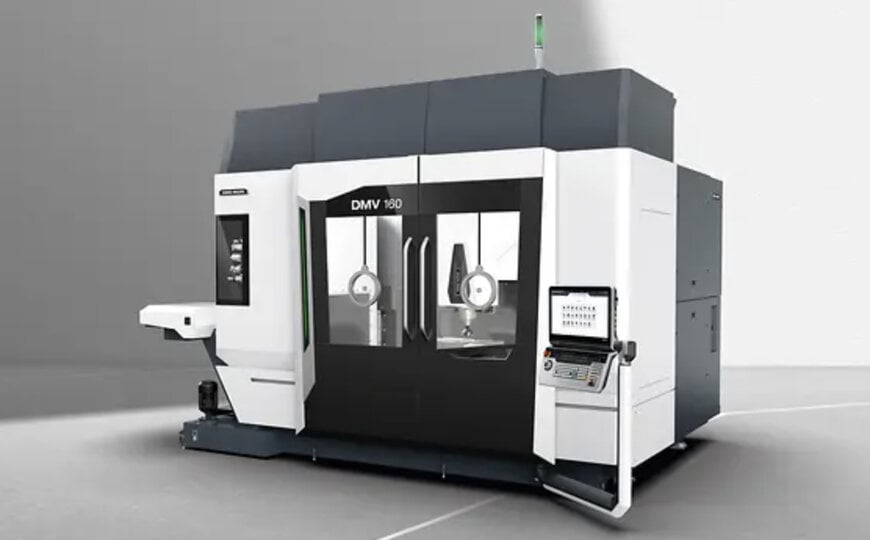
The DMV 160 from DMG MORI is one of the BX highlights at AMB 2026 and represents cost-effective, high-performance machining within the BX portfolio.
Digital Integration and Specialized Machining Cycles
Despite a focus on cost reduction, the standardized machines integrate digital and software features derived from premium lines. The machine systems maintain compatibility with the CELOS X control architecture, allowing operators to deploy advanced digital software modules over time. Integrated machining software routines, such as the Gear Package ALL IN 2.0, allow machine operators to perform gear-cutting processes—including specialized broaching sequences—directly on standard turning hardware like the CLX 450 without procuring standalone gear-cutting machinery.
Financial models complement the mechanical rollout to maintain working capital. Through dedicated internal financing structures, manufacturers can implement customized equipment leasing or apply trade-in valuations from underutilized operational equipment toward new hardware deployments.
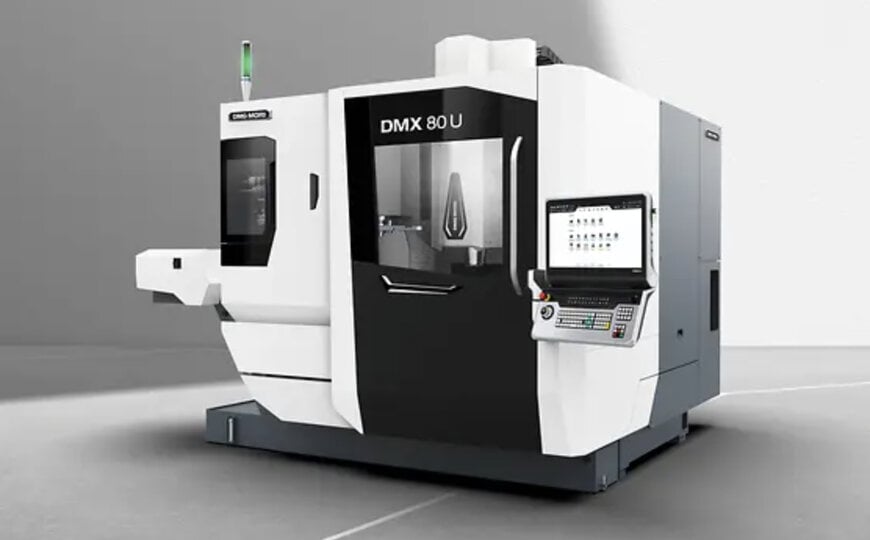
Five-Axis Precision: The DMX 80 U from DMG MORI offers cost-effective and flexible 5-axis machining within the BX portfolio.
Autonomous Production Upgrades Across Machine Lifecycles
The equipment concept establishes a continuum between entry-level standalone machines and fully automated production cells. Standardized machines serve dual operational functions: they operate as self-contained machining units for simpler workpieces, or they act as auxiliary capacity expansions within high-end Machining Transformation environments, leaving complex multi-axis cells available for advanced workpieces.
The hardware was presented at AMB 2026 at Messe Stuttgart in Hall 10. According to Dr. Harald Neun, Executive Officer at DMG MORI, the integrated system architecture allows capital investments to adapt across equipment lifecycles through modular automation and digital connectivity.
Additional Context:
This section details technical specifications and competitive benchmarking not included in the original product announcement
The DMV 160 vertical machining center incorporates a monolithic machine base with cast-iron components and roller guideways across all three axes. Axis travels measure 1,600 millimeters in X, 700 millimeters in Y, and 550 millimeters in Z, with a maximum table load rating of 2,200 kilograms and linear rapid traverse speeds of 42 meters per minute. Depending on the alloy and cutting profile, spindle configurations range from an inlineMASTER unit at 15,000 revolutions per minute up to a high-torque powerMASTER variant delivering 430 Newton-meters of torque. Direct linear measuring scales and axis drives achieve a bilateral positioning accuracy of 4 micrometers.
In the universal 3-axis and 5-axis vertical machining sector, the primary market benchmarks include the Mazak VTC and VC series (such as the VTC-800 series) and the Haas VF vertical machining centers (specifically the VF-6 and VF-7 platforms). Haas VF-6/50 models provide comparable work envelopes (1,626 x 813 x 762 millimeters) and high-torque gear-driven spindles, but operate with lower standard table load ceilings (approximately 1,814 kilograms) and maximum rapid traverse rates of 15.2 meters per minute.
By contrast, the Mazak VTC-800 series matches rapid traverse benchmarks at 50 meters per minute and provides traveling-column ergonomics, but utilizes an integrated CNC architecture centered on the Mazatrol Smooth control. The DMV 160 focuses on open digital networking via CELOS X, supporting dual integration with either Siemens Sinumerik ONE or Heidenhain TNC 7 CNC systems, while maintaining standardized hardware interfaces for modular automation via PH Cell pallet changers or Robo2Go robotic part handlers.
Edited by Natania Lyngdoh, Induportals editor, assisted by AI.
www.dmgmori.com
Machine tool builder DMG MORI presented its Best Fit Portfolio alongside established Machining Transformation systems at the AMB trade exhibition in Stuttgart, Germany. The strategy introduces standardized machining platforms and phased automation retrofits tailored for small and medium-sized enterprises and contract manufacturing facilities across automotive, aerospace, and tool and mold making sectors.
Standardized Machining Platforms for Cost-Optimized Output
Manufacturing facilities face compound operating constraints, including rising input expenditures, compressed batch volumes, and skilled labor shortages. In response, equipment utilization models are migrating away from monolithic, single-purpose installations toward modular production assets that can be automated incrementally. The Best Fit Portfolio addresses these economic parameters by packaging proven kinematics into cost-optimized, standardized platforms that reduce upfront capital expenditure while preserving mechanical precision.
The standardized equipment portfolio centers on three core machine platforms: the DMV 160 vertical machining center for three-axis milling, the CLX 450 universal lathe for turning applications, and the DMX 80 U for five-axis simultaneous machining. To minimize total cost of ownership and reduce investment exposure for job shops, selected primary mechanical assemblies feature extended warranty protection covering turnMASTER spindle units, turretMASTER tool turrets, and the ERGOline X control interface for an operating period of five years.
The DMV 160 from DMG MORI is one of the BX highlights at AMB 2026 and represents cost-effective, high-performance machining within the BX portfolio.
Digital Integration and Specialized Machining Cycles
Despite a focus on cost reduction, the standardized machines integrate digital and software features derived from premium lines. The machine systems maintain compatibility with the CELOS X control architecture, allowing operators to deploy advanced digital software modules over time. Integrated machining software routines, such as the Gear Package ALL IN 2.0, allow machine operators to perform gear-cutting processes—including specialized broaching sequences—directly on standard turning hardware like the CLX 450 without procuring standalone gear-cutting machinery.
Financial models complement the mechanical rollout to maintain working capital. Through dedicated internal financing structures, manufacturers can implement customized equipment leasing or apply trade-in valuations from underutilized operational equipment toward new hardware deployments.
Five-Axis Precision: The DMX 80 U from DMG MORI offers cost-effective and flexible 5-axis machining within the BX portfolio.
Autonomous Production Upgrades Across Machine Lifecycles
The equipment concept establishes a continuum between entry-level standalone machines and fully automated production cells. Standardized machines serve dual operational functions: they operate as self-contained machining units for simpler workpieces, or they act as auxiliary capacity expansions within high-end Machining Transformation environments, leaving complex multi-axis cells available for advanced workpieces.
The hardware was presented at AMB 2026 at Messe Stuttgart in Hall 10. According to Dr. Harald Neun, Executive Officer at DMG MORI, the integrated system architecture allows capital investments to adapt across equipment lifecycles through modular automation and digital connectivity.
Additional Context:
This section details technical specifications and competitive benchmarking not included in the original product announcement
The DMV 160 vertical machining center incorporates a monolithic machine base with cast-iron components and roller guideways across all three axes. Axis travels measure 1,600 millimeters in X, 700 millimeters in Y, and 550 millimeters in Z, with a maximum table load rating of 2,200 kilograms and linear rapid traverse speeds of 42 meters per minute. Depending on the alloy and cutting profile, spindle configurations range from an inlineMASTER unit at 15,000 revolutions per minute up to a high-torque powerMASTER variant delivering 430 Newton-meters of torque. Direct linear measuring scales and axis drives achieve a bilateral positioning accuracy of 4 micrometers.
In the universal 3-axis and 5-axis vertical machining sector, the primary market benchmarks include the Mazak VTC and VC series (such as the VTC-800 series) and the Haas VF vertical machining centers (specifically the VF-6 and VF-7 platforms). Haas VF-6/50 models provide comparable work envelopes (1,626 x 813 x 762 millimeters) and high-torque gear-driven spindles, but operate with lower standard table load ceilings (approximately 1,814 kilograms) and maximum rapid traverse rates of 15.2 meters per minute.
By contrast, the Mazak VTC-800 series matches rapid traverse benchmarks at 50 meters per minute and provides traveling-column ergonomics, but utilizes an integrated CNC architecture centered on the Mazatrol Smooth control. The DMV 160 focuses on open digital networking via CELOS X, supporting dual integration with either Siemens Sinumerik ONE or Heidenhain TNC 7 CNC systems, while maintaining standardized hardware interfaces for modular automation via PH Cell pallet changers or Robo2Go robotic part handlers.
Edited by Natania Lyngdoh, Induportals editor, assisted by AI.
www.dmgmori.com
